

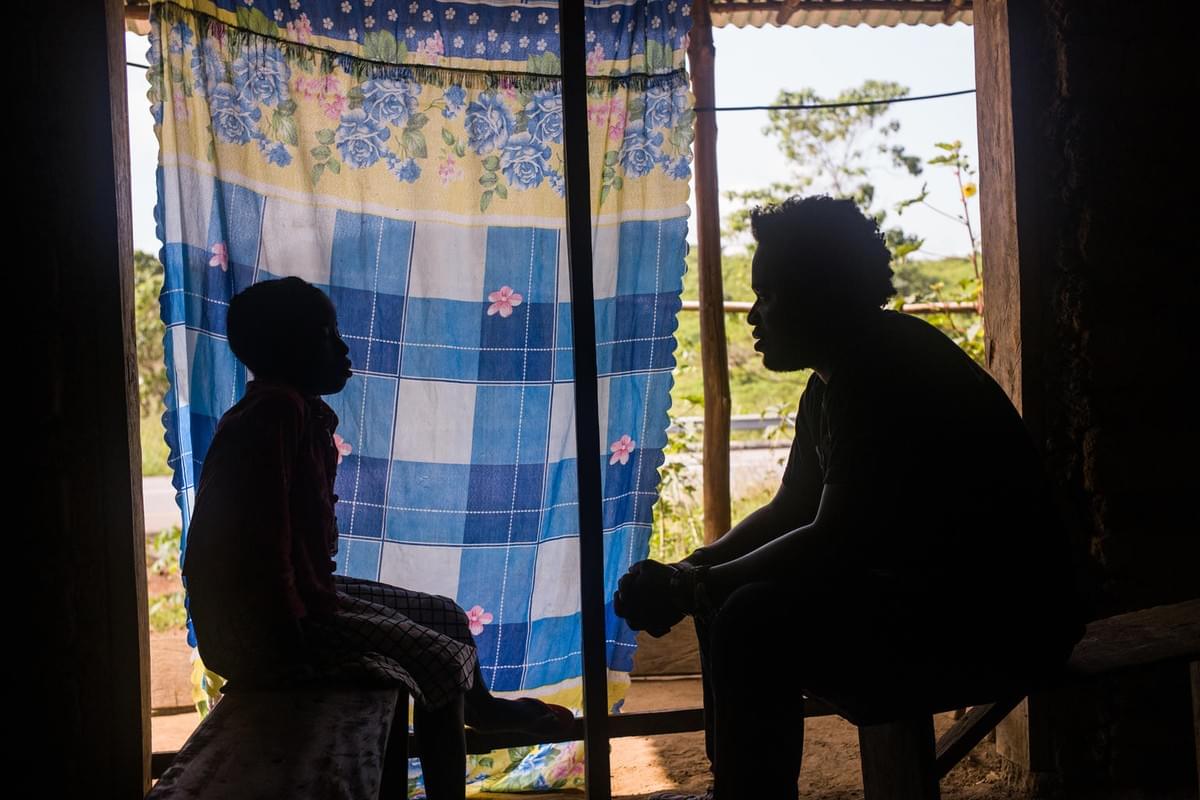
Picture a caseworker arriving at a family's home after a child protection concern has been raised. They have a case file, a form, and a limited amount of time. In the corner of the room, a girl sits quietly, watching. Is she shy? Is she struggling to hear the conversation? Does she find it difficult to follow what is being asked, or does the environment itself make it harder for her to participate? The caseworker may sense that something is affecting her engagement, but nothing in the process prompts them to explore it further.
Scenes like this are not rare in Sierra Leone, because the numbers are not small. Approximately 23 per cent of children aged 5 to 17 experience at least one functional difficulty, which is close to one in four. When these questions are not asked, a child's needs can quietly fall out of the case plan, the referral pathway, and ultimately the data. Decisions are then made with an incomplete understanding of the child's circumstances and the support they may require.
Children with disabilities are those who have impairments (i.e. functional difficulties) which interact with barriers in their environment to prevent their equal participation. When those barriers and functional difficulties are not systematically identified and documented, children risk being excluded not only from services and support, but also from the evidence that drives planning, resource allocation, and protection responses.
The missing picture in child protection data
Children with disabilities or functional difficulties meet obstacles at every stage of the protection process. They face barriers to being noticed in the first place and to having their needs properly understood. They also face barriers to being referred to services that could help. Some of these barriers are practical, such as buildings that cannot be entered or a lack of sign language interpretation. Others are about attitudes, in families, communities and sometimes institutions, where a child's difference is treated as a problem to hide rather than a need to meet.
Without a consistent way of recording information about how children function, these barriers become invisible too. Assessments as comprehensive as they can be in case file, may say little about a child's hearing, vision, mobility or learning. Planning then rests on assumptions rather than evidence, and follow-up becomes harder because nobody wrote down what support was needed. Across a whole system, the effect adds up: children with disabilities are less visible in the data, and what is not visible is rarely planned for or funded.
“Good intentions cannot close that gap. A stronger case management system tailored to capture how children function and their needs can.”
Copyright © UNICEF/UNI229280/Tremeau
A module built around the child
The Child Functioning Module, known as CFM, is an additional module that can be added to Primero. It is based on the UNICEF-Washington Group Child Functioning Module, the internationally accepted approach to collecting data on disability. Rather than asking whether a child "has a disability", a question that is often loaded and unreliable, it guides social workers through practical, child-centered questions about difficulties in day-to-day functioning. Those questions cover areas such as vision, hearing, mobility, communication, learning and behavior, and they help record the barriers a child faces and the support they need.
What makes Sierra Leone's story notable is that the module works inside Primero, a platform caseworkers already know. Primero is where they manage their cases, and the CFM is switched on as a specialized form set called the Child Functioning subform. The information a caseworker gathers is therefore not a side note in a notebook. It becomes part of the child's case record, ready to be used in planning, referrals and follow-up, and Sierra Leone is only the second country in the world to put the module into practice.
Why this is more than a new form
The CFM in Primero package is a value-added service for countries already using Primero, extending the platform with a disability-inclusive component rather than replacing anything. Compared with paper-based methods, it offers significant savings in cost and time. It produces quality, comparable data, so a picture of children's needs can be built across districts and over time rather than case by case. And it advances disability inclusion in a way that is built into everyday casework instead of added on top of it.
The payoff comes after the information is collected. Within a single case, it supports disability-inclusive planning and implementation, helping a caseworker decide which services to refer a child to and what to check at follow-up. Across the system, it supports analysis, monitoring and reporting on children with disabilities, and on how inclusive child protection services really are.
“For the first time, a ministry could begin answering a question that has long been hard to answer: which of our children have functional difficulties, and are we reaching them?”
From software to practice
A module inside a system changes nothing until people know how to use it, and Sierra Leone approached implementation with that in mind. It began with an assessment of the existing programme by a dedicated specialist in disability inclusion in child protection. Orientation for system administrators followed, then in-depth training for the caseworkers who would use the subform every day. Supporting materials were adapted to the Sierra Leone context, so that they reflect the realities of the communities caseworkers serve.
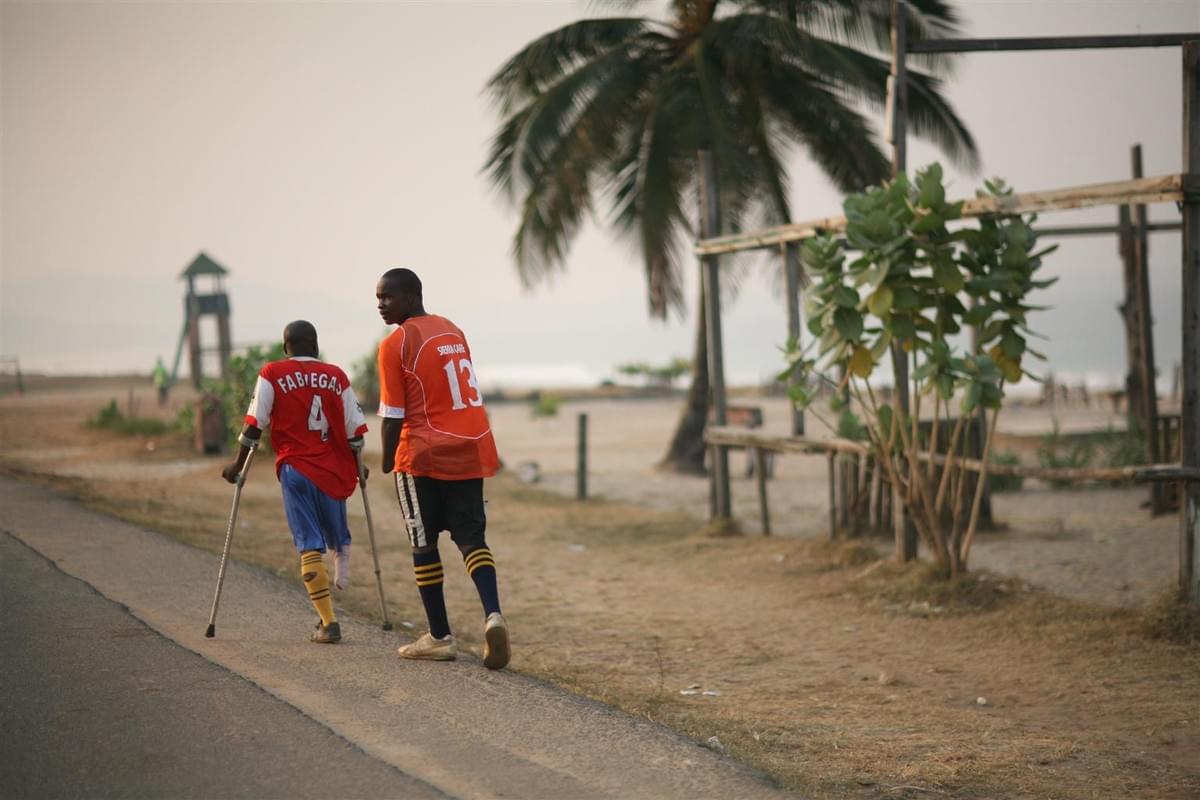
The centerpiece was a two-day training workshop, hosted in July 2026 at the UNICEF Sierra Leone country office. It brought together 16 caseworkers from the Ministry of Social Welfare, the Ministry of Gender and Children's Affairs and other national agencies. They arrived with real enthusiasm, and with experience. Many described challenges they had already met in their work, including limited access to sign language interpreters, harmful attitudes in the community and environments that children with disabilities cannot easily enter.
© UNICEF/UNI48975/Turnley
Learning by doing
The workshop was built to be practical rather than theoretical. Participants began with an introduction to children with disabilities and to disability-inclusive child protection. They then looked at the CFM in Primero package itself, followed by a detailed walk-through of completing the Child Functioning subform, one section at a time. The final session focused on something that is often overlooked: how to understand and use the information once it has been collected, so that data turns into better decisions for children and families.
A detailed case study tied these elements together. Caseworkers explored the different paths a case could take when the subform is used, and what happens when it is not used well. The exercise made one point clear. Correct use matters, because the quality of the information shapes the quality of the response, and a form completed carelessly can be as unhelpful as no form at all. Getting it right is what makes disability-inclusive case management work.
Part of a bigger build
The module does not stand alone. It belongs to a wider, long-running effort to strengthen Sierra Leone's national child protection system. Between 2015 and 2026, Primero expanded from 8 to 16 districts, making it a nationwide system. In 2026, a disability-inclusive social work education module was completed, with roll-out planned for 2027. Taken together, these steps point to a system that is being strengthened from several directions at once, through better data, improved referrals and a more inclusive social service workforce.
That combination matters. A module without trained people is just a form on a screen, and trained people without good data are working without the needed information. By building the system, the skills and the evidence base together, government and UNICEF are aiming for a child protection response in which children are less likely to be missed because of a disability, a functional difficulty or a barrier to access. It is a long-term investment, and the first results are already visible in the confidence of the caseworkers who have been trained.
Why it matters beyond Sierra Leone
“The principle behind all of this is simple: what gets recorded gets seen, and what gets seen can be acted on.”
The Child Functioning Module puts that principle into practice as an additional module within a system frontline workers already know. Sierra Leone's experience shows that the package can be introduced, taught and adopted by national caseworkers, and that the results are valuable for individual children and for the system as a whole.
For other governments or interagency case management implementations that use or are considering Primero, the lesson is practical. If your child protection system cannot yet answer the question "which of our children have functional difficulties?", the CFM in Primero package may be the place to start. Sierra Leone's caseworkers are now equipped and ready to lead the way in disability-inclusive child protection case management. The invitation to other countries is to follow this path.